What does a chiropractor do?
A chiropractor is a registered allied health practitioner who assesses and provides care for problems with the muscles, bones and joints, such as low back pain and some types of neck pain. Care may include chiropractic adjustments, joint mobilisation, soft tissue techniques and personalised exercise and posture advice, chosen after a history and examination.Maybe a friend sees one. Maybe your GP mentioned it, or your lower back has been complaining since you started working from home. If you’ve never been, it’s fair to ask: what does a chiropractor do, are chiropractors “real doctors”, and what actually happens when you walk in?
This guide answers those questions in plain language, using information from healthdirect, Ahpra and international clinical guidelines. It’s written for people in Indooroopilly and Brisbane’s western suburbs who are thinking about a first visit.
What does a chiropractor do? Your First Visit Explained
A chiropractor assesses, explains and provides care for musculoskeletal problems, meaning problems with your muscles, bones and joints (healthdirect).
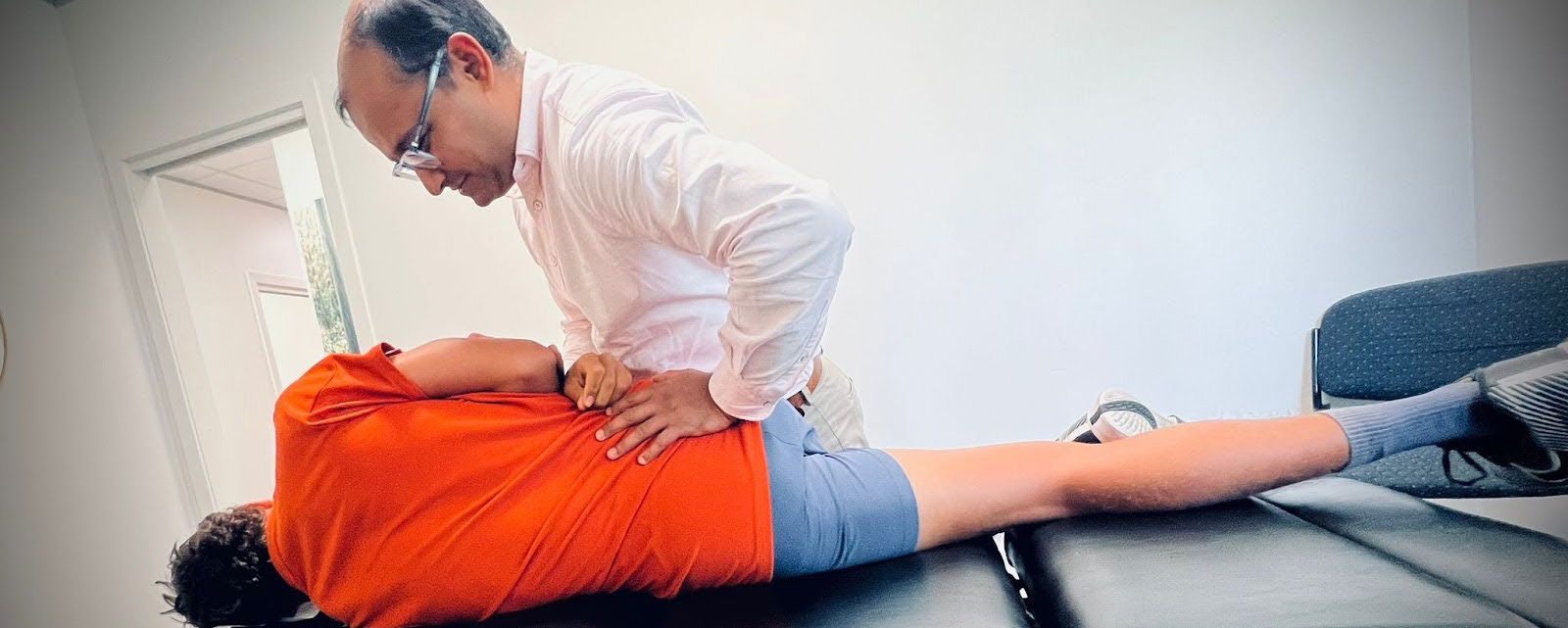
In practice, that’s three jobs. First, working out what’s going on, through a history and examination. Second, explaining what we found and your options, including whether chiropractic care suits you at all. Third, where it does, providing hands-on care and advice that aims to support spinal mobility and function.
A chiropractor isn’t the right first stop for everything. If chiropractic care isn’t suitable for your condition, a chiropractor may refer you to another health professional.
Are chiropractors doctors?
No, chiropractors are not medical doctors. In Australia they are registered health practitioners, and some use “Dr” as a courtesy title.
healthdirect puts it plainly: chiropractors are allied health professionals, not medical doctors. Every chiropractor practising in Australia must be registered with the Chiropractic Board of Australia through Ahpra, the national regulator, and must complete ongoing training.
The title “chiropractor” is protected under the National Law, so only someone registered as a chiropractor can use it (Ahpra). “Doctor” isn’t a protected title. Ahpra’s guidance is that when “Dr” doesn’t refer to a registered medical practitioner, the practitioner’s profession should be made clear (Ahpra).
That’s why you’ll see our chiropractor written as Dr Richard Kashmiri (Chiropractor). The “Dr” is a courtesy title, and the word in brackets tells you his profession: he’s a chiropractor, not a GP or other medical practitioner. You can check any chiropractor’s registration on the Ahpra public register, and you can read more about chiropractic care at our Indooroopilly clinic.
What happens at your first chiropractic visit?
Your first visit is mostly about understanding the problem, with a discussion of options before any hands-on care.
- History. We ask what brought you in, when it started, what eases or aggravates it, your general health, any medicines you take and past injuries.
- Examination. Our chiropractor looks at how you move and checks your joints, muscles and posture, plus reflexes, strength and sensation where relevant.
- Imaging, only if needed. X-rays and scans are considered only where clinically indicated, with referral where appropriate. NICE, for example, advises against routinely offering imaging for low back pain in non-specialist settings (NICE).
- Findings and options. We explain what we found in plain language. We’ll assess your symptoms and discuss whether chiropractic care is appropriate for you, including its potential benefits, limitations and risks.
healthdirect suggests a few questions worth asking at this point: why this treatment is recommended, its potential benefits and risks, and whether you should discuss the plan with your doctor. Ask them. A good first visit leaves you clear on what happens next.
What techniques might a chiropractor use?
Chiropractors use a mix of hands-on and lower-force techniques, chosen to suit your assessment and your comfort. At Equilibrium Family Wellness, these may include:
| Technique | What it involves |
| Diversified | Hands-on adjustments: a quick, controlled movement applied to a specific joint |
| Gonstead | A hands-on adjusting approach guided by a detailed examination of the spine |
| Activator | A small hand-held instrument that delivers a lower-force adjustment |
| SOT (Sacro Occipital Technique) | Padded wedges placed under the pelvis, with gentle positioning |
| Joint mobilisation | Slower, gentler movement of a joint through its range |
| Soft tissue techniques | Hands-on work on tight muscles and the tissues around them |
| Movement and exercise advice | Personalised exercises, posture and workstation tips for between visits |
You won’t necessarily have all of these. Which ones suit you depends on what we find and what you’re comfortable with, and you’re welcome to ask about lower-force options. You can read more about our chiropractic treatments.
What do chiropractors commonly help with?
Low back pain and neck pain are among the most common reasons people see a chiropractor (healthdirect).
What does the evidence say? According to healthdirect, spinal manipulation may help some people with low back pain, and may also help some types of neck pain, especially when combined with exercise.
International guidelines on low back pain point the same way. NICE suggests considering spinal manipulation, mobilisation or soft tissue techniques alongside exercise rather than on their own (NICE). The World Health Organization’s guideline on chronic low back pain lists spinal manipulative therapy among the non-surgical interventions it recommends, together with education and exercise programs (WHO).
That’s why exercise and movement advice is built into our chiropractic plans, not tacked on at the end. Chiropractors also give advice on posture and workstation set-up, which can be useful if desk work leaves your neck stiff. Our care focuses on musculoskeletal problems like these.
Is chiropractic care safe?
Safety starts with the assessment. healthdirect recommends discussing what to expect, and the potential benefits and risks, before a chiropractor treats you.
It also lists things to tell your chiropractor first, because they help decide whether treatment is safe for you. Mention it if you:
- have osteoporosis, arthritis or very flexible joints (hypermobility)
- take blood-thinning medicines or have a condition that increases your risk of bleeding
- have a condition that increases your risk of stroke
- have a condition that makes your skin fragile or slow to heal
- have had a recent injury, surgery or severe pain in your neck or back
If something doesn’t feel right during care, tell us. We can change the technique, use a lower-force option, or stop.
When should you see your GP instead?
Some symptoms need medical assessment first. See your GP, or go to the emergency department, if back or neck pain comes with:
- numbness in the groin or saddle area
- loss of bladder or bowel control
- new weakness in an arm or leg
- fever
- unexplained weight loss
- severe or worsening pain after a fall or accident
Your GP can also help diagnose your condition and may refer you to a chiropractor if appropriate. If you’re unsure where to start, the healthdirect helpline (1800 022 222) has registered nurses available 24 hours a day.
Frequently Asked Questions
More answers are on our FAQs page.
No. You can book directly, and healthdirect notes that many chiropractors see people privately without a referral. If you have a chronic condition, ask your GP whether a GP management plan could make you eligible for some Medicare-funded chiropractic sessions.
Rebates may be available depending on your fund and level of cover. Check with your fund before your appointment.
Search their name on the Ahpra public register. It shows whether they’re registered as a chiropractor and their current registration status.
Wear comfortable clothing you can move, bend and turn in. Bring a list of your current medicines and any relevant scan reports or letters from your GP.
It depends on what your assessment shows. We’ll discuss a plan with you, including how we’ll review your progress, and you can ask questions or change your mind at any point.
Book an assessment with our chiropractor in Indooroopilly
If you’ve been putting off a first visit because you weren’t sure what to expect, start with an assessment. Book with our chiropractor at Equilibrium Family Wellness in Indooroopilly, close to Indooroopilly station and serving Brisbane’s western suburbs. We’ll assess your symptoms and discuss whether chiropractic care is appropriate for you, including its potential benefits, limitations and risks. Contact us to arrange a time.
Equilibrium Family Wellness in Indooroopilly ContactSources Used
- Chiropractors and chiropractic treatment. healthdirect Australia, last reviewed March 2026. https://www.healthdirect.gov.au/chiropractors-chiropractic-treatment
- Advertising hub: frequently asked questions (Who can use the title “Dr”?). Ahpra. https://www.ahpra.gov.au/Resources/Advertising-hub/Frequently-asked-questions.aspx
- Guidelines for advertising a regulated health service, Appendix 2: Title protection. Ahpra and National Boards. https://www.ahpra.gov.au/Publications/Advertising-resources/Legislation-guidelines/Advertising-guidelines.aspx
- Registers of practitioners. Ahpra. https://www.ahpra.gov.au/Registration/Registers-of-Practitioners.aspx
- Low back pain and sciatica in over 16s: assessment and management (NG59). National Institute for Health and Care Excellence (NICE), 2016, amended 2026. https://www.nice.org.uk/guidance/ng59/chapter/Recommendations
- WHO releases guidelines on chronic low back pain. World Health Organization, 7 December 2023. https://www.who.int/news/item/07-12-2023-who-releases-guidelines-on-chronic-low-back-pain