Can you see a chiropractor while pregnant?
Yes. Pregnancy on its own doesn’t rule out chiropractic care, but it’s best to let your GP, obstetrician or midwife know, and to see them first if you have any warning signs. Chiropractic care in pregnancy focuses on musculoskeletal comfort, such as lower back and pelvic pain, using techniques and positions adapted to your stage of pregnancy.
Written by Dr Richard Kashmiri (Chiropractor), Equilibrium Family Wellness
Your lower back aches by mid-afternoon. Rolling over in bed sends a twinge through your pelvis. You’re far from alone: back pain affects up to 7 out of 10 pregnant people, according to Pregnancy, Birth and Baby.
It’s natural to wonder whether chiro during pregnancy is a sensible option. Below, we cover why the pain happens, what research says about safety, what an assessment at Equilibrium Family Wellness in Indooroopilly involves, and when to see your GP, obstetrician or midwife first.
Can you see a chiropractor while pregnant?
Yes, pregnancy doesn’t usually rule out chiropractic care, but the decision belongs alongside your maternity care, not instead of it.
Your GP, obstetrician or midwife looks after your pregnancy as a whole. A chiropractor’s role is narrower: musculoskeletal problems such as lower back pain, pelvic girdle pain and posture-related discomfort. Consensus recommendations for chiropractic care in pregnancy include informed consent, a discussion of risks, and working alongside other health professionals (Weis et al., 2022).
Before any care, our chiropractor asks about your pregnancy and who is providing your maternity care. If you have a high-risk pregnancy, or your care team has advised you to avoid certain activities, talk to them before you book. If lower back pain is your main concern, you can also read about our chiropractic care for back pain.
Why do back and pelvic pain happen in pregnancy?
Back and pelvic pain in pregnancy usually come from a mix of hormonal, postural and load-related changes.
According to Pregnancy, Birth and Baby, hormonal changes cause the ligaments around your lower back and pelvis to relax and stretch, and the weight of your growing baby pulls your spine forward. The pain can also affect your sleep.
Pelvic girdle pain is a little different from lower back pain. A 2018 review in the Australian Journal of General Practice describes it as pain around the back of the pelvis, near the sacroiliac joints, sometimes with pain at the front over the pubic bone. It often starts between 14 and 30 weeks.
| Comparison | Lower back pain | Pelvic girdle pain |
|---|---|---|
| Where you feel it | In the lower back, above the pelvis. | Around the back of the pelvis near the sacroiliac joints, sometimes at the pubic bone. It may spread into the hips and thighs. |
| Common effects | Can disrupt daily activities and sleep. | Can make standing, walking and sitting harder. |
You may have read that the hormone relaxin “loosens” the pelvis and causes pain. The same review notes there’s no clear link between relaxin levels and pelvic girdle pain; the causes are mixed.
Is chiropractic care safe during pregnancy?
Serious problems after chiropractic care in pregnancy appear to be rare in the published research, although that research is limited.
A 2012 review found only a small number of reported adverse events after spinal manipulation during pregnancy and after birth. They ranged from short-lived increases in pain to rare serious injuries. A 2021 update reached a similar conclusion, while calling for better reporting of adverse events.
That’s why care starts with a careful history and a conversation about potential benefits, limitations and risks before anything hands-on happens. You can ask questions, or stop, at any point.
Can a chiropractor help with pregnancy back and pelvic pain?
A chiropractor can assess your back and pelvic pain and, where clinically appropriate, provide care that aims to support your comfort and mobility as your body changes.
At Equilibrium Family Wellness, care in pregnancy is individualised and may include:
- low-force chiropractic adjustments, including instrument-assisted techniques such as Activator
- hands-on chiropractic adjustments adapted to your stage of pregnancy
- joint mobilisation for the lower back, pelvis and hips
- soft tissue techniques for tight muscles around the lower back, hips and buttocks
- personalised movement and exercise advice
Movement is a central part of the plan. A Cochrane review found that exercise programs reduced the number of women reporting combined back and pelvic pain, and improved low back pain and disability (though the authors rated that evidence as low quality). Our chiropractor will suggest movements that suit your symptoms and stage of pregnancy.
Chiropractic care may help some people feel more comfortable and move more easily. It doesn’t replace your antenatal care.
What happens at a pregnancy chiropractic assessment?
Your first visit starts with a conversation, then an examination, then a discussion of your options before any care begins.
- History. We ask about your pain, how many weeks pregnant you are, who provides your maternity care, and whether you’ve had back or pelvic pain before. That last question matters: the AJGP review lists previous back or pelvic pain as a risk factor for pelvic girdle pain.
- Examination. Our chiropractor checks how your lower back, pelvis and hips move, uses gentle tests for the sacroiliac joints and pubic area, and checks strength, sensation and reflexes where relevant.
- Looking for anything that doesn’t fit. Back pain in pregnancy can occasionally be a sign of something else, such as a urinary tract infection or preterm labour (Pregnancy, Birth and Baby). If your symptoms point that way, we’ll refer you to your GP, obstetrician or midwife first.
- Discussion. We explain what we found, the options, and their potential benefits, limitations and risks. You decide what happens next.
Positioning and comfort: how chiro during pregnancy is adapted
Care is adapted so you’re comfortable and there’s no pressure on your abdomen.
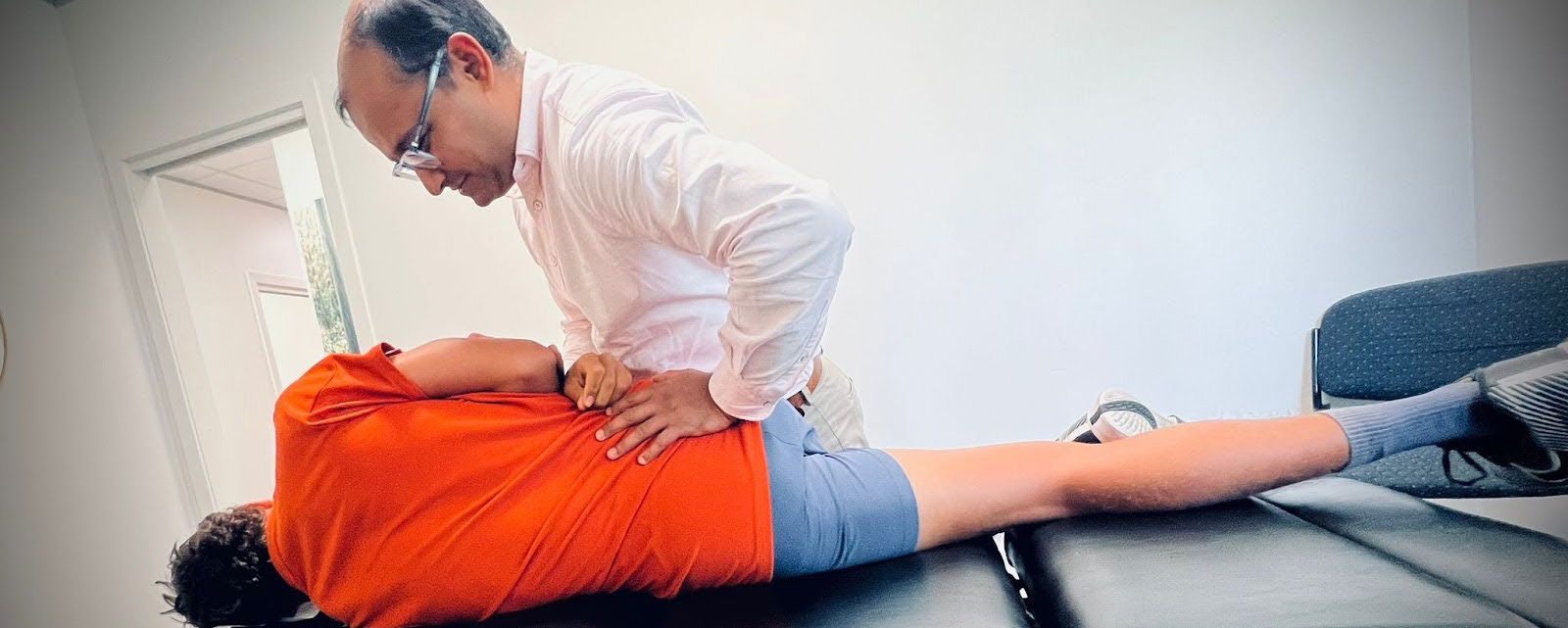
Lying face down gets harder as pregnancy progresses, so our chiropractor uses positions such as lying on your side or sitting. Lower-force techniques are available if they suit you better. If a position feels uncomfortable, tell us and we’ll change it.
Everyday ways to ease back and pelvic discomfort
Small changes to how you sleep, sit and move can help alongside your chiropractic care. Pregnancy, Birth and Baby suggests:
- sleeping on your side with a pillow between your legs, and changing sides from time to time
- keeping your knees together as you roll over to get out of bed
- avoiding long periods of sitting or standing
- low-impact activity such as walking, swimming and gentle stretching and strengthening
- a support garment or belt if you have pain
Stop any exercise that causes or worsens your pain, and check with your doctor or midwife before starting something new.
When to talk to your GP, obstetrician or midwife first
Some symptoms need medical care before chiropractic care, and some need it urgently.
Call triple zero (000) if you have:
- heavy vaginal bleeding, strong pain, or you feel very unwell
- possible signs of preterm labour: abdominal pain or cramps, pressure in your pelvis or lower back, or fluid leaking from your vagina
- numbness in the groin or saddle area, loss of bladder or bowel control, or new weakness, numbness or pins and needles in your legs
Contact your doctor, midwife or hospital birth unit straight away if you have:
- any bleeding from your vagina
- concerns that your baby is moving less than usual (Pregnancy, Birth and Baby)
- sudden swelling of your hands, face or feet, a headache that doesn’t ease with simple pain relief, or vision problems such as flashing lights (Pregnancy, Birth and Baby)
- pain when you urinate, blood in your urine, or changes to your bladder or bowel habits
- back or pelvic pain after a fall or accident
Frequently Asked Questions
You can have an assessment at any stage of pregnancy. We’ll ask how many weeks you are and adapt positions and techniques to suit. Let your GP, obstetrician or midwife know you’re considering chiropractic care.
No. We use positions that avoid pressure on your abdomen, such as lying on your side or sitting. If a position feels uncomfortable, tell us and we’ll change it.
Yes, we recommend it. Your maternity care team looks after your pregnancy as a whole, and consensus recommendations for chiropractic care in pregnancy include working alongside other health professionals.
If your assessment suggests chiropractic care isn’t appropriate, or something needs medical attention, we’ll tell you and recommend you see your GP, obstetrician or midwife. The decision about care is yours.
Low-impact activity such as walking, swimming and gentle stretching can help, according to Pregnancy, Birth and Baby. Stop anything that causes or worsens pain, and check with your doctor or midwife before starting something new.
Talk to us about pregnancy chiropractic care in Indooroopilly
If back or pelvic discomfort is making pregnancy harder, talk to us about whether chiropractic care is appropriate for you, and check with your GP, obstetrician or midwife. We’ll assess your symptoms and discuss whether chiropractic care is appropriate for you, including its potential benefits, limitations and risks.
Equilibrium Family Wellness is at our Indooroopilly clinic, close to Indooroopilly station and serving Brisbane’s western suburbs. Contact us to arrange an assessment.
Sources
- Backache in pregnancy. Pregnancy, Birth and Baby (healthdirect Australia), last reviewed February 2026. https://www.pregnancybirthbaby.org.au/backache-in-pregnancy
- Pre-eclampsia. Pregnancy, Birth and Baby (healthdirect Australia), last reviewed December 2023. https://www.pregnancybirthbaby.org.au/pre-eclampsia
- Baby movements during pregnancy. Pregnancy, Birth and Baby (healthdirect Australia), last reviewed February 2026. https://www.pregnancybirthbaby.org.au/baby-movements-during-pregnancy
- Pelvic girdle pain in pregnancy. Australian Journal of General Practice (RACGP), 2018. https://www.racgp.org.au/AJGP/2018/July/Pelvic-girdle-pain-in-pregnancy
- Liddle SD, Pennick V. Interventions for preventing and treating low-back and pelvic pain during pregnancy. Cochrane Database of Systematic Reviews, 2015. https://www.cochrane.org/evidence/CD001139
- Stuber KJ, Wynd S, Weis CA. Adverse events from spinal manipulation in the pregnant and postpartum periods: a critical review of the literature. Chiropractic & Manual Therapies, 2012. https://pmc.ncbi.nlm.nih.gov/articles/PMC3348005/
- Weis CA, Stuber K, Murnaghan K, Wynd S. Adverse events from spinal manipulations in the pregnant and postpartum periods: a systematic review and update. Journal of the Canadian Chiropractic Association, 2021. https://pubmed.ncbi.nlm.nih.gov/34035539/
- Weis CA, Pohlman K, Barrett J, et al. Best-practice recommendations for chiropractic care for pregnant and postpartum patients: results of a consensus process. Journal of Manipulative and Physiological Therapeutics, 2022. https://doi.org/10.1016/j.jmpt.2021.03.002